







How to Write a Winning Letter of Medical Necessity (LMN) for a Safety Bed
When requesting a special needs safety bed through private health insurance, Medicaid, or state waiver programs, one document holds the key to approval: the Letter of Medical Necessity (LMN).
An LMN is a clinical document written by a healthcare professional, typically a pediatrician, neurologist, occupational therapist (OT), or physical therapist (PT), explaining why a patient requires a specific piece of Durable Medical Equipment (DME) to maintain safety and health.
Insurance medical reviewers review hundreds of requests daily. If an LMN relies on vague statements like "the child needs a safe bed," the claim will almost certainly be denied. To win approval, an LMN must establish specific medical necessity, document functional limitations, and prove why less expensive alternatives are unsafe.
This guide provides a step-by-step breakdown of how to construct a winning LMN for an enclosed safety bed, key clinical justifications to include, and a sample framework for your care team.
4 Critical Elements Insurance Reviewers Look For
Insurance companies evaluate DME claims using strict clinical criteria. To approve funding for a safety bed, the reviewer must see clear documentation addressing four primary areas:
| 4 KEYS TO LMN INSURANCE APPROVAL | |
|---|---|
| 1. Specific Hazards | Reduces risk of injury, provides a safe sleep space |
| 2. Failed Options | Rules out standard bed designs |
| 3. Connect Diagnosis to Bed Design | Medical needs & features that solve hazards |
| 4. Clinical Outcome | Prevention of ER visits/injury |
1. Documented Safety Hazards and Behaviors
Vague behavioral descriptions are not enough. The LMN must detail specific, documented nighttime behaviors and hazards, such as:
- Nighttime Elopement / Unsupervised Wandering: Unawareness of danger, attempts to leave the home, or accessing hazards (kitchens, stairs).
- Nocturnal Seizure Activity: Risk of falling during or after a seizure, or striking hard objects during tonic-clonic episodes.
- Involuntary Movements / Thrashing: Head-banging, severe body-rocking, or spasms that risk injury against hard surfaces.
- Lack of Safety Awareness: Cognitive delays that prevent understanding height, falls, or room boundaries.
2. Failure of Less Costly / Less Restrictive Alternatives
Insurance guidelines require attempting or medically ruling out less expensive options before approving specialized equipment. The LMN must explicitly state why standard solutions fail:
- Standard Twin Beds & Cribs: Inadequate height boundaries, leading to falls or elopement.
- Add-On Bed Rails: Present severe, life-threatening entrapment gaps between the rail and mattress.
- Weighted Blankets & Floor Mattresses: Do not prevent wandering, offer no impact protection against surrounding walls/furniture, and present suffocation risks for some diagnoses.
3. Direct Connection Between Diagnosis and Bed Design
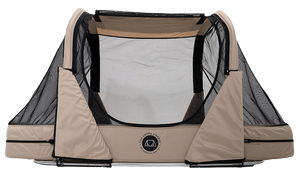
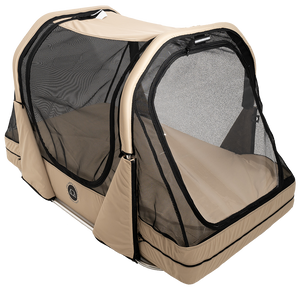
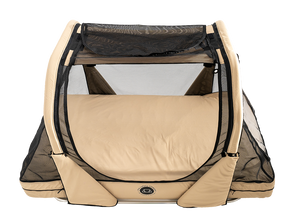
The LMN must detail why the specific features of an enclosed bed, such as The Safety Sleeper, are medically necessary:
- Gap-Free Zipper Enclosure: Prevents body-part entrapment by securing the mattress directly into the enclosure.
- Padded Frame Structure: Absorbs impact during seizures, spasms, or head-banging.
- 360-Degree Breathable Mesh: Maintains ventilation, prevents overheating, and allows continuous caregiver monitoring.
- External Locking Zippers: Prevents unsupervised exit from the bed.
4. Prevention of Costly Medical Interventions
Frame the bed as a preventive medical tool that reduces injury risk and provides a safe sleep environment. Highlight how the safety bed prevents emergency room visits, fractures, head trauma, or costly hospitalizations resulting from nighttime injuries or elopement.
The Anatomy of a Winning LMN: Step-by-Step Breakdown
A complete, professional Letter of Medical Necessity should follow a clear, structured format:
Section 1: Patient Information & Diagnosis
- Full legal name, date of birth, insurance ID number, and claim number.
- Primary and secondary ICD-10 medical diagnoses (e.g., Autism Spectrum Disorder G31.84, Epilepsy G40.909, Cerebral Palsy G80.9).
- Patient's age, height, and weight.
Section 2: Clinical Summary & Functional Limitations
- Detailed physical and cognitive evaluation from an OT, PT, or physician.
- Description of the patient's mobility level, communication skills, and cognitive age versus chronological age.
- Nighttime behavior log summary (e.g., "Patient wakes 3 - 5 times per night and immediately attempts to climb out of bed").
- Describes sleep patterns and sleep disturbances.
Section 3: Justification of Specific Bed Features
Explain why specific product design features are medically necessary:
- "A fully enclosed zipper system is medically necessary to prevent entrapment hazards associated with traditional rails."
- "Internal high-density padding is medically necessary to cushion involuntary movements during nocturnal seizures."
Section 4: Statement of Medical Necessity & Prognosis
Conclude with a definitive clinical statement signed by the treating healthcare provider:
- "Without the installation of a medical-grade enclosed safety bed, this patient remains at imminent risk for severe physical trauma, head injury, or elopement during periods of sleep and/or rest. It is my professional opinion that [Product Name] is medically necessary for this patient's health and safety."
Sample LMN Language & Phrasing Framework
Care teams can adapt these clinical phrasing examples when drafting an LMN:
For Autism & Elopement:
"Patient has a primary diagnosis of Autism Spectrum Disorder (ICD-10 F84.0) accompanied by severe cognitive impairment and zero safety awareness. Patient exhibits frequent night waking and attempts nighttime elopement. Standard beds and cribs are ineffective as patient climbs over traditional barriers, placing them at severe risk for household trauma or elopement into the community. An enclosed safety bed with external locking mechanisms is medically necessary to maintain a secure sleep perimeter."
For Seizures & Impact Hazards:
"Patient experiences frequent nocturnal tonic-clonic seizures due to intractable epilepsy (ICD-10 G40.802). During seizure activity, patient exhibits uncontrolled motor movements, posing extreme risk of falling from an elevated surface or impacting hard bed components. Traditional bed rails present dangerous entrapment zones. An enclosed safety bed with integrated padding and a gap-free mattress compartment is medically necessary to prevent falls, impact injuries, and body part entrapment."
Common LMN Mistakes That Cause Denials
Avoid these common pitfalls when submitting your documentation:
- ❌ Using Non-Medical or "Convenience" Terms: Never use phrases like "helps the family sleep better," "gives parents a break," or "easy for travel." Focus entirely on the patient's physical safety as it directly relates to the medical diagnosis and medical needs.
- ❌ Omitting the OT/PT Evaluation: An LMN signed only by a physician without an accompanying therapist evaluation is frequently delayed. Include a formal therapy assessment.
- ❌ Failing to Specify Model Details: Ensure the exact model name, dimensions, and necessary accessories are listed clearly with medical justifications – due to specific medical need – so the insurance reviewer understands the exact item being requested.
ALWAYS Take the Next Step Toward Approval
A well-crafted Letter of Medical Necessity bridges the gap between your loved one's safety needs and insurance approval. A significant percentage of enclosure beds are approved on appeal. By working closely with your clinical care team and using precise medical justification, you can successfully secure coverage.
For additional documentation support, sample templates, and guidance on working with Durable Medical Equipment (DME) providers, visit our full resource center on Letters of Medical Necessity for Safety Beds or explore our guide to Special Needs Beds Covered by Insurance.