









Weighted Blankets and Sensory Sleep Aids: What Parents Should Know
When your child has trouble settling down at night, even a simple bedtime routine can become a long and exhausting process. Lights may feel too bright. Ordinary household sounds may be distracting. Pajamas, sheets, or blankets may feel uncomfortable. Some children continue moving, rocking, touching objects, or seeking pressure long after the rest of the household is ready for sleep.
These challenges are especially common among children with autism, ADHD, sensory processing differences, developmental disabilities, and certain neurological conditions. Because every child responds to sensory input differently, there is no single sleep product that works for every family.
Weighted blankets are among the most popular sensory sleep aids, but they are only one option. Lighting, sound, fabric texture, visual routines, movement, fidget tools, and the overall design of the sleep environment can all influence how comfortable a child feels at bedtime.
Before adding a weighted blanket or another sensory product to your child’s routine, it is important to understand what the tool is designed to do, what the research shows, and how to use it safely.
Table of Contents
- What Are Sensory Sleep Aids?
- Why Sensory Differences Can Affect Sleep
- How Do Weighted Blankets Work?
- Do Weighted Blankets Help Children Sleep?
- Are Weighted Blankets Safe for Children?
- Weighted Blankets Are Not the Only Way to Provide Pressure
- Other Sensory Sleep Aids to Consider
- Introduce One Sensory Aid at a Time
- When Sleep Problems Need Medical Attention
- Building a Sensory Routine Around Your Child
What Are Sensory Sleep Aids?
Sensory sleep aids are products or environmental adjustments intended to make bedtime feel more comfortable and predictable. They may reduce unwanted sensory input, such as bright light or sudden noise, or provide sensory input that a person finds organizing or calming.
Examples include:
- Weighted blankets and lap pads
- Blackout curtains
- White-noise machines
- Dimmable lighting
- Soft or seamless bedding
- Body pillows
- Fidget tools used before bed
- Visual bedtime schedules
- Familiar music or calming sounds
- A defined, enclosed sleep environment
The goal is not to overwhelm the bedroom with products. It is to identify the specific sensory experiences that help your child transition from an active part of the day into rest.
One child may relax with firm pressure and a heavier blanket. Another may dislike anything touching their legs. One may need nearly complete darkness, while another becomes anxious without a night-light.
Your child’s responses should guide the process.
Why Sensory Differences Can Affect Sleep
Most people naturally reduce stimulation as bedtime approaches. They dim the lights, become less active, and settle into a comfortable bed.
For a child with sensory differences, the nervous system may not respond to that transition in the same way. A sensation that seems minor to someone else may remain distracting or uncomfortable.
Common bedtime challenges can include:
- Sensitivity to the texture of pajamas or bedding
- Discomfort caused by tags, seams, wrinkles, or elastic
- Sensitivity to light from windows, hallways, or electronics
- Distress caused by traffic, plumbing, appliances, or voices
- Difficulty recognizing that the body is tired
- A need for movement, pressure, rocking, or repetitive activity
- Anxiety when moving from one part of the bedtime routine to another
- Discomfort with temperature changes
- Difficulty adjusting to an unfamiliar room or bed
Sensory needs can also vary from day to day. A child who tolerates noise and touch well on a quiet day may become much more sensitive after school, travel, illness, a crowded event, or another demanding experience.
This is why sensory sleep support usually works best as an adaptable routine rather than a rigid formula.
How Do Weighted Blankets Work?
Weighted blankets contain materials such as glass beads or plastic pellets that distribute additional weight across the body.
They are intended to provide deep pressure input. This is the sensation created by firm, evenly distributed pressure, similar to a close hug, compression garment, or weighted lap pad. Some children and adults describe this type of pressure as grounding, comforting, or calming.
A weighted blanket may therefore help a child feel more settled as part of a bedtime routine. However, it should not be treated as a guaranteed solution for insomnia or other sleep problems.
Do Weighted Blankets Help Children Sleep?
Research on weighted blankets is mixed.
One randomized controlled trial studied children with autism between the ages of 5 and 16 who had significant sleep difficulties. The weighted blanket did not help the children fall asleep significantly faster, sleep longer, or wake less often when compared with a standard blanket. However, many of the children and parents preferred the weighted blanket, and the children generally tolerated it well during the study.
A systematic review of weighted-blanket research found some evidence that weighted blankets may help reduce anxiety in certain situations, but there was not enough evidence to conclude that they reliably treat insomnia.
That distinction matters. A weighted blanket may make bedtime feel more pleasant without producing a measurable change in total sleep time. For some families, greater comfort and easier participation in the bedtime routine may still be useful. For others, the blanket may have little effect or may feel hot, restrictive, or uncomfortable.
A child’s preference is important, but safety must come first.
Are Weighted Blankets Safe for Children?
Weighted blankets are not appropriate for every child, and they should never be used with infants.
The American Academy of Pediatrics advises that weighted blankets, weighted swaddles, weighted sleepers, and other weighted objects should not be placed on or near a sleeping infant. The U.S. Consumer Product Safety Commission also warns families not to use weighted blankets or weighted swaddles for babies.
For an older child, parents should consult the child’s pediatrician or occupational therapist before using a weighted blanket, particularly if the child has complex medical, developmental, respiratory, circulatory, or mobility needs.
A child using a weighted blanket should be able to move underneath it and remove it independently. The blanket should never cover the child’s face or restrict the neck. It should not be wrapped tightly around the child or used as a restraint.
Professional guidance may be especially important when a child:
- Cannot remove the blanket without assistance
- Has limited mobility or muscle weakness
- Has breathing difficulties or sleep apnea
- Has a cardiac or circulatory condition
- Has difficulty regulating body temperature
- Experiences seizures
- Becomes distressed by confined or restrictive sensations
- Tends to enter, unzip, tear, or become trapped inside bedding
- Cannot reliably communicate pain, overheating, or breathing discomfort
Families should also check whether a specific product has been recalled. The CPSC has recalled some children’s weighted blankets because a child could unzip the cover, enter the blanket, and become trapped. Two fatalities were associated with one recalled product.
Do not assume that a product is appropriate solely because it is marketed for children or described as therapeutic.
Weighted Blankets Are Not the Only Way to Provide Pressure
Some children enjoy firm pressure but do not need—or cannot safely use—a full weighted blanket throughout the night.
A smaller weighted lap pad may be useful during a supervised wind-down routine. It can be placed across the lap while the child reads, listens to music, completes a visual bedtime schedule, or participates in another quiet activity.
The Weight Mate is a portable weighted lap pad designed to provide focused pressure without functioning as a full-size blanket. It can be used across the lap or other areas of the body during an appropriate supervised sensory activity. It is available in several weights, allowing families and professionals to select an option based on the individual’s needs.
A lap pad may also be easier to remove before the child falls asleep. This allows the sensory tool to support the transition toward bedtime without leaving a heavy product in the sleep space overnight.
An occupational therapist can help determine whether a weighted product is appropriate and how it should be incorporated into the routine.
Other Sensory Sleep Aids to Consider
Weighted products receive a great deal of attention, but other sensory adjustments may be more effective for a particular child.
1. Adjustable Lighting
Bright overhead lighting can make it difficult for some children to shift into a calmer state.
Consider gradually dimming the lights during the hour before bedtime. A dimmable lamp, blackout curtains, or a low-intensity night-light may help create a more comfortable environment.
The ideal setup depends on the child. Some children need complete darkness, while others feel anxious when the room is too dark.
Avoid rapidly changing, flashing, or highly stimulating lights near bedtime.
2. Consistent Background Sound
Sudden or unpredictable noises can be especially disruptive. A fan, white-noise machine, or familiar audio track may help mask household and outdoor sounds.
Keep the volume low enough that caregivers can still hear the child and that alarms, monitors, or medical equipment remain audible. Place cords and devices where the child cannot pull them into the bed or become entangled.
Some children prefer silence, so do not assume that background sound will always be calming.
3. Sensory-Friendly Bedding and Pajamas
The texture of a sheet or pajama seam may be enough to keep a sensory-sensitive child awake.
Experiment with:
- Soft, breathable fabrics
- Tagless pajamas
- Flat seams
- Snug or loose sleepwear, depending on preference
- Smooth sheets without wrinkles
- Familiar bedding
- Lightweight blankets
- Temperature-appropriate materials
Invite your child to help select bedding when possible. A fabric that feels soft to an adult may still be uncomfortable to the child who will use it.
4. A Visual Bedtime Schedule
For some children, the most difficult part of bedtime is not the bed itself. It is the transition from one activity to another.
A simple visual schedule can show each step in order:
- Put away toys.
- Take a bath.
- Put on pajamas.
- Brush teeth.
- Choose a book.
- Get into bed.
- Turn off the light.
Using the same sequence each evening can make the routine more predictable. It also helps the child see that bedtime has a clear beginning, middle, and end.
5. Calming Movement Before Bed
A child who seeks movement may have difficulty going directly from active play to lying still.
A therapist may recommend structured movement or “heavy work” earlier in the bedtime routine. Depending on the child, this could include carrying appropriate objects, pushing a laundry basket, stretching, or completing slow, controlled movements.
Highly stimulating exercise immediately before bed may have the opposite effect. Observe how your child responds and move active sensory input earlier when necessary.
6. Fidget and Tactile Activities
Some children regulate themselves by touching, sorting, squeezing, or manipulating objects.
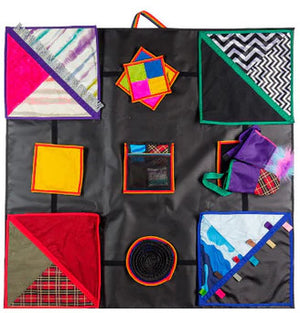
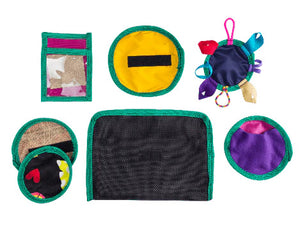
The Fidget Folder combines different textures, sounds, and interactive elements in one portable device. This tool may be incorporated into a supervised calming period before bed rather than left loose in the sleep space throughout the night.
Remove any item that could create a choking, entanglement, or injury risk before the child is left unattended.
7. A Defined Sleep Space
Some children settle more easily when the sleep area feels clearly separated from the rest of the room. A defined environment may reduce visual distractions and make the bed feel familiar and predictable.
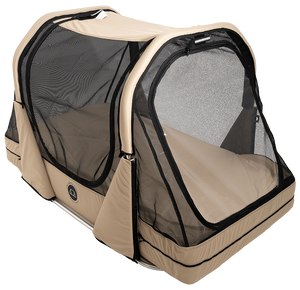
For children who also wander, fall from bed, become entangled, or engage in unsafe nighttime behavior, an enclosed safety bed may address risks that ordinary sensory products cannot.
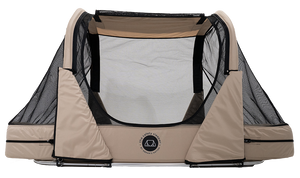
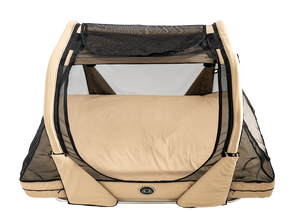
The Safety Sleeper® provides a fully enclosed sleep space for children and adults with special needs. Its purpose is to create a more secure nighttime environment and help reduce risks related to wandering, falls, entrapment, and certain unsafe behaviors.
It is important to distinguish these functions. An enclosed safety bed does not treat sensory processing differences, autism, or insomnia. It may, however, form one part of a broader nighttime plan that includes an individualized sensory routine, medical care, and caregiver supervision.
Introduce One Sensory Aid at a Time
When a child is sleeping poorly, it can be tempting to change the lighting, bedding, sound, routine, and sleep products all at once.
That makes it difficult to know what is helping.
Instead, begin with the child’s most obvious source of discomfort. Introduce one adjustment and observe the response over several nights when possible.
Keep a simple record of:
- How long it takes the child to settle
- Whether the child appears calmer or more distressed
- How often the child wakes
- Whether the child asks for or rejects the sensory aid
- Signs of overheating or physical discomfort
- Any changes in nighttime wandering or unsafe behavior
- How the child feels the following morning
Sensory tools should remain optional whenever possible. If a child repeatedly pushes an item away, becomes distressed, or tries to escape from it, stop using it and reassess the approach.
When Sleep Problems Need Medical Attention
Sensory adjustments can improve comfort, but they cannot address every reason a child may struggle to sleep.
Contact the child’s healthcare provider if you notice:
- Loud, persistent snoring
- Gasping, choking, or pauses in breathing
- Frequent nighttime seizures
- Significant pain or reflux
- Repeated waking accompanied by distress
- Extreme daytime sleepiness
- A sudden change in sleep behavior
- Sleep problems that continue despite a consistent routine
- Increasing nighttime aggression or self-injury
A pediatrician may recommend evaluation by a sleep specialist, neurologist, behavioral health professional, or occupational therapist, depending on the symptoms.
Building a Sensory Routine Around Your Child
Weighted blankets and sensory sleep aids are tools, not universal solutions. The most effective bedtime routine is the one that reflects your child’s sensory preferences, abilities, medical needs, and safety risks.
For one child, the right combination may be dim lighting, seamless pajamas, and a visual schedule. Another may benefit from quiet movement followed by supervised use of a weighted lap pad. A third may need fewer sensory products and a simpler, less stimulating bedroom.
Start by observing your child rather than following a generic checklist. Introduce changes gradually, ask for professional guidance when weighted products are being considered, and never allow a sensory strategy to override basic sleep safety.
At The Safety Sleeper®, we understand that a good night’s sleep depends on more than comfort alone. Families may also be managing wandering, falls, seizures, self-injurious behaviors, medical equipment, and other complex nighttime needs.
By combining an individualized sensory routine with an appropriate sleep environment and guidance from your child’s care team, you can create a bedtime plan designed around what matters most: comfort, safety, and better rest for the entire family.
This article is intended for general educational purposes and does not replace individualized advice from a pediatrician, occupational therapist, sleep specialist, or other qualified healthcare professional.